

YouTube, Gaming, And The Attention Economy: Why Your Child Can't Look Away
What your child is actually up against, and why you were never supposed to win this alone.

I remember watching one of my children spend forty-five minutes watching someone else open a Kinder Egg.
Not playing with toys. Watching someone else open a small plastic egg, take out a tiny figure, and do it again. And again. And again.
I sat on the sofa next to him, nursing the baby, trying to understand the appeal, genuinely unable to find it. It looked like nothing. But he was so engrossed.
That was years ago. What came after was harder to make sense of. I'd check on one of my kids and find them watching something on YouTube, completely unrelated to what they'd started with. A favorite book character had become dark humor. A funny video had become something I'd never have allowed if I'd been in the room from the beginning. The algorithm didn't care about their age. It cared about one thing: keeping them watching.
This is what we’re actually dealing with. Not a child without self-control. Not a failure of parenting. A system designed by some of the most sophisticated engineers in the world, with billions of dollars behind it, optimized entirely for one outcome: that your child does not stop.
Understanding that distinction changes everything.
What’s actually happening in their brain
There’s a mechanism inside the brain called the dopamine reward system, and it’s been around since humans needed it to survive. When something good happens, or when something good might happen, dopamine is released. It motivates. It drives. It says: do that again. This is why we eat, why we connect with people we love, why we feel pride after working hard at something.
It’s also exactly what YouTube and gaming platforms have spent years learning to exploit.
Variable reward is the key. Not consistent reward, which the brain adjusts to quickly, but unpredictable reward, the kind you can’t quite anticipate. The next video might be interesting. It might not. The next level might feel incredible. It might be frustrating. The next comment might be funny. The next unboxing might have the rare figure. You don’t know. And that uncertainty is precisely what makes it so difficult to stop.
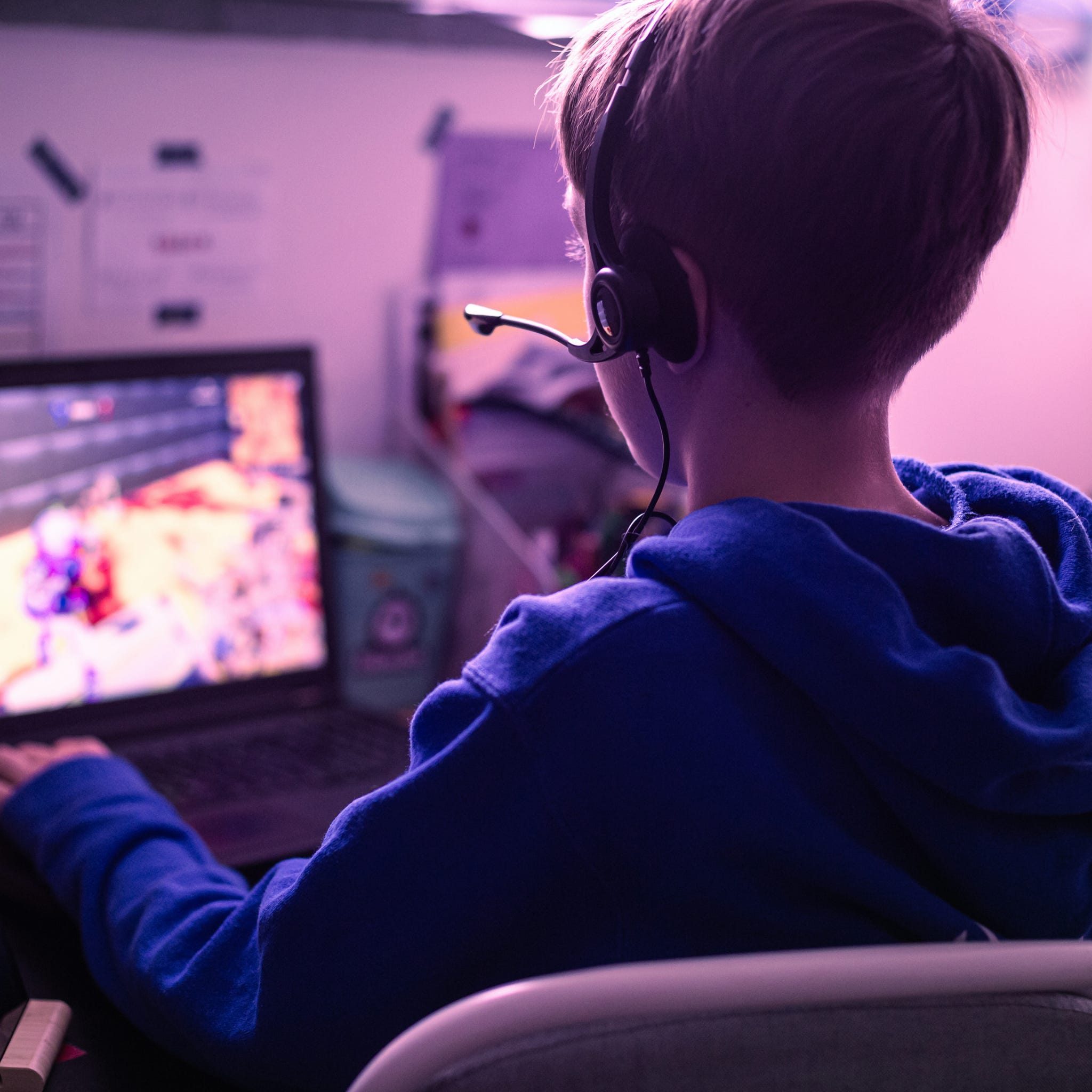
Gaming is built on exactly this. My boys spent months absorbed in Brawl Stars, an app on their phones, always chasing a better score, always one round away from beating their last attempt. The game isn’t designed to feel finished. It’s designed to feel almost finished, perpetually, so that stopping always feels like leaving something on the table. That’s not an accident of design. That is the design.
For a child, whose prefrontal cortex, the part of the brain responsible for judgment, impulse control and long-term thinking, isn’t fully developed until their mid-twenties, the pull is genuinely harder to resist than it is for most adults. When your child says they just want to finish this one thing and then can’t, they aren’t lying to you. They’re telling you the truth about what’s happening inside their brain.
This doesn’t mean there are no limits. It means the limits need to come from you, because they don’t yet have the neurological architecture to reliably set them for themselves.
The need underneath the screen
There’s also something happening underneath the content itself that’s worth understanding.
The rabbit hole doesn’t just happen because the algorithm is clever. It happens because at some point, your child found something there that felt good. A feeling of being seen by a YouTuber who speaks directly to camera, to them, as if they know each other. A sense of mastery in a game when real life feels hard and unpredictable. A place to switch off a brain that’s been switched on all day at school, managing friendships, emotions, and expectations.
With gaming specifically, that sense of mastery is real and it matters. When a child is struggling at school, or feeling overlooked, or navigating something socially that’s draining them, a game gives them a world where they’re competent, where effort is immediately rewarded, where they can win. That’s not nothing. It’s worth understanding what that winning is doing for them, because dismissing the game without understanding the need it’s meeting rarely works.
The question to keep alongside the brain science is: what’s my child finding here that they’re not finding somewhere else?
That’s not a question with a comfortable answer. But it’s the honest one.
What Islam says about your child’s attention
The Prophet ﷺ said:
“Your body has a right over you.”
(Sahih Bukhari 5199).
There’s a wholeness to a human being that Islam honors, the body, the mind, the soul, each with its needs and its rights. When one is being fed in a way that starves another, that’s worth paying attention to.
Screens, when they’re working against us, are feeding a very specific and very narrow part of the human experience. The part that wants stimulation. The part that wants novelty. The part that wants to feel something without the cost of feeling it fully. They’re not feeding the part that needs to be bored and survive it. The part that needs real-world connection. The part that needs enough quiet to hear its own thoughts, or to hear something beyond them.
The Prophet ﷺ also said:
“Take benefit of five before five: your youth before your old age, your health before your sickness, your wealth before your poverty, your free time before your preoccupation, and your life before your death.”
(Shu’ab al-Iman, Al-Bayhaqi, authenticated by Al-Albani in Sahih al-Jami 1077).
Free time is named here as something precious. A gift to be used. The attention economy has made a business of consuming it.
This isn’t about banning screens
None of this means screens are haram or that gaming is inherently harmful or that YouTube is the enemy. It means that neither of them should be the thing that dominates your child's day, while the things that actually matter, movement, conversation, boredom, connection, get squeezed into whatever's left. The problem isn't the screen. It's what's being quietly pushed out to make room for it.
A child who plays games for an hour after school and then comes to the dinner table fully present is different from a child whose whole nervous system has become organized around when they can get back to the screen. A child who watches YouTube occasionally is different from a child who panics or rages when the device is taken away. Distress at losing screen time isn’t just a bad mood. It’s information.
It’s also worth saying: the younger this starts, the harder the pattern is to shift. Handing a toddler a device running YouTube to buy yourself twenty minutes of quiet is understandable. Truly, it is. But it’s worth knowing that you’re introducing them to the algorithm before they have any of the tools to navigate it. They don’t need to wait until they’re older to start being pulled in a direction the platform has already decided for them.
I don't think our children are broken, and I don't think we failed them by letting them have screens. None of us were given a manual for this. We've all been figuring it out as we go.
But figuring it out requires actually looking at it. At what the platform is designed to do. At what it’s doing to your specific child. At what your child is getting from it that they might need help getting somewhere else.
That’s not a technology conversation. It’s a relationship conversation.
And it’s one worth starting.
You’re doing better than you think.
With du’a,
Gulnaz | Halal Parenting
Surah Al-Baqarah 2:44 | Surah Al-Ahqaf 46:15
If you want to know what to actually say, how to have this conversation with a seven-year-old versus a fifteen-year-old, how to set limits without constant battles, and how to figure out what your child is really looking for online, that’s exactly what This Week At Home covers this Friday. Age-specific scripts, troubleshooting, and a hadith reflection for each stage. Subscribe at updates.halalparenting.com to get it delivered to your inbox.