


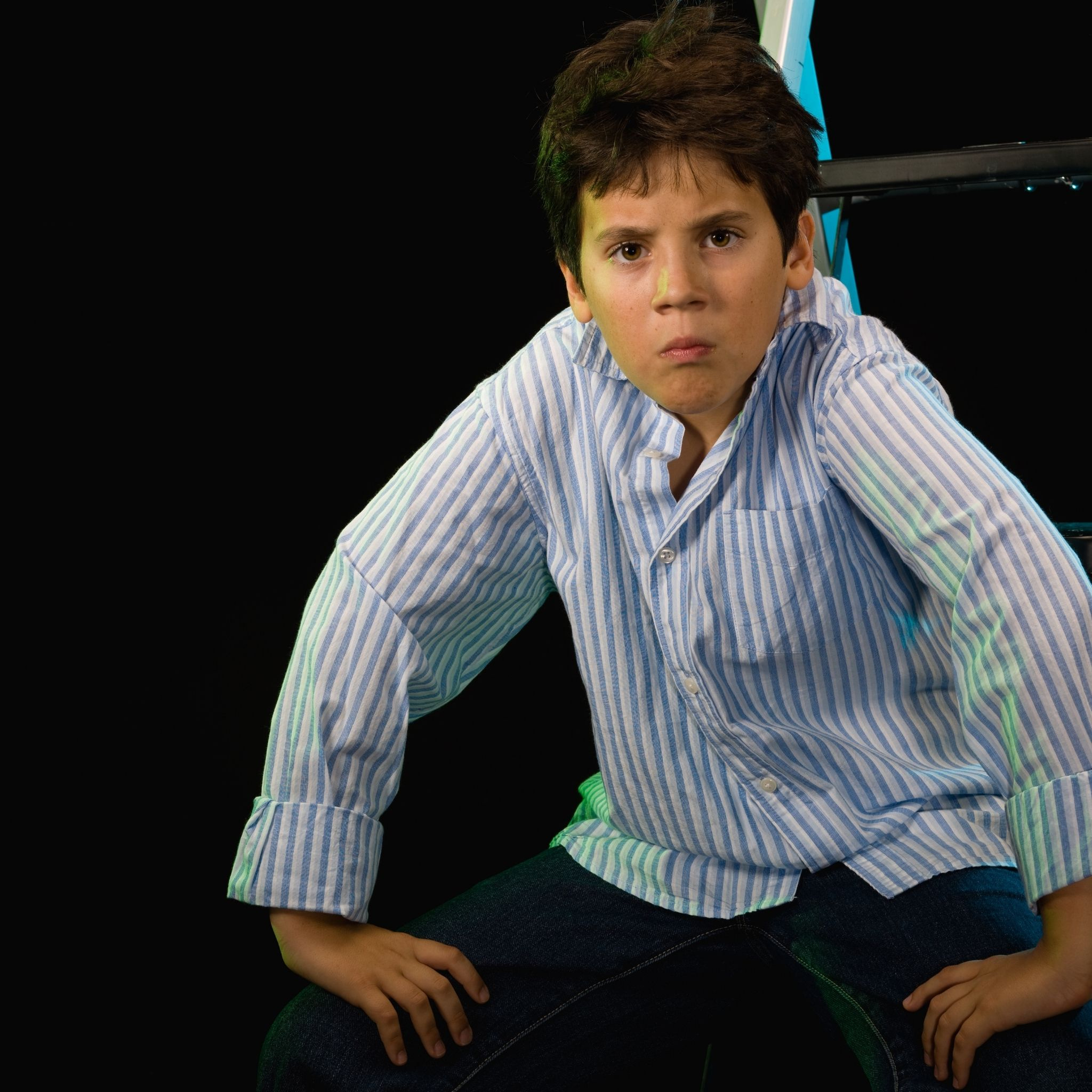
Every parent of a strong-willed child knows the feeling.
You ask for something simple. Shoes on. Homework started. Phone down.
And suddenly the room is filled with resistance.
A sigh.
An eye roll.
A long argument about fairness.
Before long, what began as a small request turns into a full power struggle.
Subscribe to get your FREE download: “A 3-Step Parenting Reset for Power Struggles.”
In these moments, it can feel as if our authority as parents is being tested. Challenged. Even rejected.
So we react.
We raise our voice.
We repeat ourselves.
We push harder.
And often, the child pushes harder right back.
But what if the problem is not that our authority is too weak?
What if the real problem is that we misunderstand what authority actually is?
Many parents unknowingly approach discipline as a contest of control. Whoever insists the loudest wins.
But Islamic parenting was never meant to be built on domination.
It was meant to be built on moral authority.
The Prophet ﷺ had more influence over people than any leader in history, yet his authority did not come from force. It came from character.
Allah describes his way with people in the Qur’an:
“It is by the mercy of Allah that you were gentle with them. If you had been harsh or hard-hearted, they would have dispersed from around you.”
— Qur’an 3:159
This verse is not just about leadership in public life. It is also about leadership inside the home.
Harshness does not create obedience of the heart. It creates distance.
Gentleness, on the other hand, invites closeness. And closeness opens the door to influence.
The Prophet ﷺ taught this principle clearly:
“Gentleness is not placed in anything except that it beautifies it, and it is not removed from anything except that it makes it defective.”
— Reported by Muhammad in Sahih Muslim
Gentleness does not mean permissiveness.
It means our authority is grounded in calm conviction rather than emotional reaction.
A parent who argues with their child is already standing on shaky ground. But a parent who remains calm, steady, and clear sends a powerful message:
I am not here to fight you. I am here to guide you.
Power struggles thrive on emotional escalation. When we refuse to escalate, the struggle often loses its energy.
This does not mean parenting suddenly becomes easy. Children will still resist. They will still test limits.
But when authority comes from steadiness rather than control, the relationship begins to change.
Children stop fighting quite so hard.
Because deep down, every child is looking for a parent who feels bigger than the conflict.
Not louder.
Just steadier.
And the truth is, the calm parent almost always wins the real battle — the battle for their child’s trust.
Reflection
Parenting is not a series of perfect decisions. It is a long process of learning how to guide our children with wisdom, patience, and steadiness.
In this newsletter, we are slowly rebuilding a framework for parenting that reflects the depth of our tradition: one rooted in mercy, responsibility, and moral authority.
Next week, we’ll continue exploring the foundations that help parents lead their homes with calm confidence.
If this reflection resonated with you, consider subscribing so you don’t miss the next article in the series.
…so many parents trying to assert their authority to rule their children, they think the “most important lesson” to their children to be taught is how to obey the system they are living in, there’s a very narrow bridge between parent and a child for communication, that bridge only works on trust, not authority, if parents choose to be a troll managing that, it will not work, you can not win “stand off” with your children, that bridge will be closed and you going to lose your child
…children are most neglected and underestimated force in every society and how you manage to make their own person out of them is up to the parents, they can sabotage their children’s life applying strict rules and live in constant conflict they never win, curiosity is the major factor in process of life and its progress, if you bringing up a curious child, it will break rules and defy you every chance they get and it’s a good thing, because it’s a quality of an independent person, but most families prefer to have a “structure” of the family containing and curbing this “disturbing” behavior labeling it a “delinquency” perpetuating this “epic struggle” between parents and “insane teenagers”.
…it’s not easy to be a parent of a teenager, but if you would really remember your childhood, you can understand that you are NOT a victim here, you’re just continuing to be a parent, decision you already made when you’ve become one and you as a parent will learn much more from your children then you ever will teach them
…i consider it the most important aspect of parenting
https://www.psychologytoday.com/us/blog/rethinking-mental-health/202002/family-dictators/amp